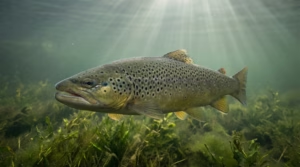
Peak season is open, two stockings are in play, and the loch is fishing at its great. The first batch of fresh fish arrived on Friday 27 February, rainbows averaging 3–3.5 lb alongside browns to 10 lb, all settled and moving confidently. A second delivery of 2.5 lb blues and bows arrives this coming week, adding variety across the loch as the season properly gets underway. Water clarity is exceptional, levels are perfect, and the fish already in the loch are feeding well across a range of methods. Rod average among named rods this week was 11.0.
Weekly Summary
- Peak season open: 1st March 2026. Permits are now £32.50 catch and release, dawn to dusk.
- First stocking: Rainbows averaging 3–3.5 lb and browns to 10 lb introduced Friday 27 February. All fish settled quickly and feeding confidently.
- Second stocking this week: 2.5 lb blues and bows arriving mid-week. Date to be confirmed — follow the fishery page for the update.
- Water: Crystal clear, perfect height. Far bank holding a significant head of fish, willing to chase.
- Rod average (named rods, 13 reported): 11.0 fish. Range: 6 to 19. Some anglers found it more testing mid-session.
- Rods are filling up. Weekend sessions in particular are moving quickly. Book early.
- Club and group bookings are picking up for spring. Contact us directly to discuss dates.
- Lake Shadow weed management programme begins shortly.
Pricing Update — Peak Season 2026
Peak season pricing takes effect from 1st March 2026. We held permits at the same rate for a full year and delayed any increase for as long as the numbers allowed. A 50p per lb increase in fish supply costs makes a £3 adjustment necessary to maintain stocking quality and keep rods capped at 12. The increase is modest and the model remains unchanged.
- Peak Season (March–October): £32.50 catch and release, full day dawn to dusk.
- Winter (November–February): £29.50 catch and release.
- Fish kill bolt-on: £8 per fish, increased by £1.
- Current bookings and existing memberships: unchanged, no action required.
- Pricing will next be reviewed in spring.
Why does Wormit cost more than nearby fisheries? Because it operates differently. A hard cap of 12 rods means 60–70% of the bank is free at any given time. You are not buying a peg; you are buying the freedom to move, read water, and fish properly. Add crystal-clear water for 90% of the year, a balanced and well-managed ecosystem, consistent top-quality stocking, and a venue that rewards the thinking angler rather than the one who parks up and waits. That is the model, and the price reflects it.
Catch Highlights
- David Simpson — 19 fish. Hard-fighting fish throughout a strong all-round session.
- Alex Burns — 17 returned. Consistent throughout the day.
- Scott Pozzi — 14. Twelve on the bung with a cat bug set at 30 inches; two on Diawl Bachs on a floater. Scott’s session deserves specific attention. He identified three distinct areas on the loch where fish were actively rising, with no surface activity anywhere else. Rather than simply camping on the rises, he found that fish in those zones remained catchable sub-surface between the rise cycles, while the rest of the loch required a different approach. This is the kind of water-reading that separates a disciplined session from a frustrating one. The lesson: when risers are localised, go to them, stay with them, and fish below the film as well as in it.
- Brian Dewar — 14 returned.
- Steve Morris — 11. The Kate McLaren accounted for the majority of his fish. See the tactics section.
- Darren McPherson — 11 returned.
- James Lang — 10 returned.
- Alan Smith — 9.
- Brian Sutherland — 9 returned.
- Dougie Cooper — 9 returned.
- Rick Wilkie — 8. A varied bag on Diawl Bachs, pink eggs, Ally McCoist, and a couple taken off the top on a white floating fry. Surface option worth noting as the season warms.
- Calum Parr — 6, all around the lagoon. Three on blue flash damsel, one on pink egg under bung, two on yellow owl. A textbook example of working a specific area methodically rather than moving around the whole loch.
- John Reid — 6 and a couple dropped.
Plenty of bags in the 2–5 range also reported. Some anglers found it more challenging, particularly in the brighter mid-session windows when fish temporarily went off the surface. Depth adjustment, not fly change, was the answer in most cases.
Want to be featured? Send your catch, flies used, and a short note on your session to fishery@salmoscotland.co.uk or by text. Include tactics and a photo in the net if you have one.
Best Tactics and Flies
Pattern of the week: Kate McLaren. Steve Morris took the majority of his 11 on this traditional Scottish wet fly, and it is worth understanding exactly why rather than simply noting the result. As water temperatures climb through the 7–10°C bracket in early spring, snails become a primary food source. They begin moving across hard surfaces — stones, weed stems, submerged structure — and trout target them actively. The Kate McLaren, with its palmered hackle, soft profile, and dark colouring, presents a convincing silhouette of a snail in or just below the surface film. It is not a flashy pattern and it does not need to be. Fish it slowly. Traditional patterns earn their place at this time of year; this week is a straightforward reminder of that.
Lines. Floater with a long leader for surface and shallow sub-surface work, particularly in the calmer morning and evening windows. Midge tip or slow intermediate when fish are holding a foot or two down. Sink tip for the far bank in windier conditions when fish are reluctant to commit at the surface.
Depth. The bung at 30 inches was the single most productive presentation of the week, confirmed across multiple rods. When fish are concentrated in defined areas rather than moving freely, a fixed-depth indicator removes the guesswork and keeps the fly exactly where the fish are. Adjust to 18 inches in calmer, shallower conditions; go deeper if sport drops off mid-morning.
Retrieve. Slow figure-eight or static for buzzers and Diawl Bachs, especially in the morning. Steady figure-eight with an occasional pause for damsels and Apps. The far bank fish will follow a stripped fly, but many are short-taking; try a brief pause or a slow lift rather than stripping all the way back. A fish that has followed once will often turn and take on a more considered approach.
Approach. The far bank is holding a significant head of fish and is worth prioritising. Work it methodically rather than covering it quickly. The lagoon remains productive for those who spend time in it; Calum Parr’s session this week is a good template. If an area goes quiet, move in line with the peg rotation rule rather than waiting it out.
Fly selection.
- Cat Bug (bung, 30 inches): the standout fly of the week. First choice until proven otherwise.
- Olive Apps (Appetiser): reliable searching pattern on an intermediate or midge tip. Covers ground, provokes confident takes.
- Black Snake / Black Mamba: stripped on a sink tip in brighter, windier conditions when fish are sitting deeper.
- Diawl Bach: fished static or on a slow figure-eight across all conditions. Never a bad choice.
- Buzzers (size 14, black or olive): in the surface film during the calmer first and last hours of the day.
- Kate McLaren: fished slowly in the film or just sub-surface. Most effective when fish are rolling rather than aggressively breaking the surface.
- Blue flash damsel: productive in the lagoon on a slow retrieve through the margins.
- Pink egg and yellow owl (under bung): effective when fish are holding at a fixed depth and not moving far to intercept.
- White floating fry: worth a cast in the last 30 minutes of light. Brown trout in particular will respond.
- Ally McCoist: a reliable attractor as part of a mixed cast throughout the day.
Stocking and Water Management
Two stockings are being introduced in close succession as peak season opens. The first delivery arrived on Friday 27 February: rainbows averaging 3–3.5 lb, bright and full-finned, alongside browns to 10 lb. Both groups settled within hours and were moving confidently through the water the same evening. The browns in particular are already distributing well across the loch.
A second delivery of 2.5 lb blues and bows arrives this coming week. This second batch will add variety across the loch and ensures that anglers fishing mid-week onwards will find fresh fish alongside the settled first cohort.
Water clarity remains exceptional. The loch is at a perfect height and the ecosystem is in excellent condition for the start of the season.
Lake Shadow — weed management programme. We will shortly be introducing Lake Shadow as part of our ongoing weed management strategy. The product works by filtering the red end of the light spectrum in the water column, which inhibits photosynthesis in aquatic weed and can reduce growth by up to 90%. It requires no harsh chemicals, is safe for fish, and will not affect water quality or clarity.
Angler Reminders
- Peg rotation is formalised and non-negotiable: 6 fish or 90 minutes per peg, whichever comes first. Move on, miss the next peg, then resume. No side-by-side fishing when mixed rods are present. This applies to all anglers without exception and will be enforced.
- Discarded nylon: lengths of nylon have again been found on the bank. This is not acceptable. It is a direct hazard to wildlife and reflects poorly on everyone who fishes here. Take all nylon home; bins are provided in the car park. Cameras operate on site. Continued incidents will result in reduced day ticket access or removal of syndicate privileges.
- Litter: take everything home or use the car park bin. The fishery is maintained to a high standard; please respect that.
- Barbless or de-barbed hooks only. Keep fish wet, handle briefly, and return cleanly. Photographs in the net are preferred over prolonged handling.
- Permits: Book online using the link below. Full rules: wormitfishery.co.uk/fishery-rules
- Parking: Please use the anglers car park.
Weather Forecast — Wednesday to Sunday, 4–8 March 2026
High pressure dominates early in the week, giving the best fishing conditions on Wednesday and Thursday before a wetter front arrives on Friday. The weekend clears to bright, largely settled conditions. Wind is light throughout the period. Water temperature is holding at approximately 8°C, consistent with the sub-surface and film-based tactics producing well this week.
- Wednesday 4 March: High 11°C / Low 1°C. Clear start, cold overnight. Light southerly breeze. Pressure approximately 1026 mb, stable. Dry throughout. Sunrise 06:52, sunset 18:09.
- Thursday 5 March: High 14°C / Low 4°C. Mild and bright, high cloud. Light SSW winds. Pressure approximately 1014 mb, easing. Best day of the week for surface sport. Sunrise 06:50, sunset 18:11.
- Friday 6 March: High 9°C / Low 4°C. Overcast with rain, approximately 7 mm through the day. Light easterly winds. Pressure approximately 1020 mb. Fish sub-surface throughout; buzzers and Diawl Bachs the go-to. Sunrise 06:47, sunset 18:13.
- Saturday 7 March: High 13°C / Low 2°C. Clear and bright; hard frost overnight. Light westerly winds. Pressure approximately 1023 mb, steady. Excellent conditions; the cold start will see fish moving freely once the air warms. Sunrise 06:45, sunset 18:15.
- Sunday 8 March: High 13°C / Low 6°C. Cloudy with patchy light showers possible later. Light SE winds. Pressure approximately 1017 mb. Strong morning session before any deterioration. Sunrise 06:43, sunset 18:17.
Advice
With the first stocking settled and a second arriving this week, the loch is carrying an excellent head of fish across a wide range of sizes, even before stocking last Friday. The opportunity is there; the question is whether you read the water or rely on habit.
Start on the bung with a cat bug at 30 inches. That was the most consistent single presentation of the week and it should be your opening move until the fish tell you otherwise. If nothing is happening after 20 minutes, change depth before you change fly. A cat bug at 18 inches or 42 inches will often produce when the same pattern at 30 inches draws a blank.
The far bank is holding fish in numbers and they will chase. The issue is the short take. Do not strip all the way back; pause briefly at 6 to 8 metres out and hold the fly for a second or two. Fish that have followed will frequently turn and take. This is a small adjustment but it will make a material difference to your conversion rate.
If you are not carrying a Kate McLaren, add one before your next session and try it. It will keep producing through March and into April and beyond as spring kicks in properly. Fish it on a floater with a long leader, barely moving, just below or in the film.
Bookings
Peak season is open, two stockings are in play, and sessions are filling. Book early to avoid disappointment (we had to turn rods away last week).
Dawn to dusk. Maximum 12 rods. No walk-ins.
- Book day tickets online
- Season Pass — £500 for 25 visits (£20 per session)
- Gift vouchers available
- Telephone: 07727 360428
Tight lines,
Greig, Wormit Trout Fishery